
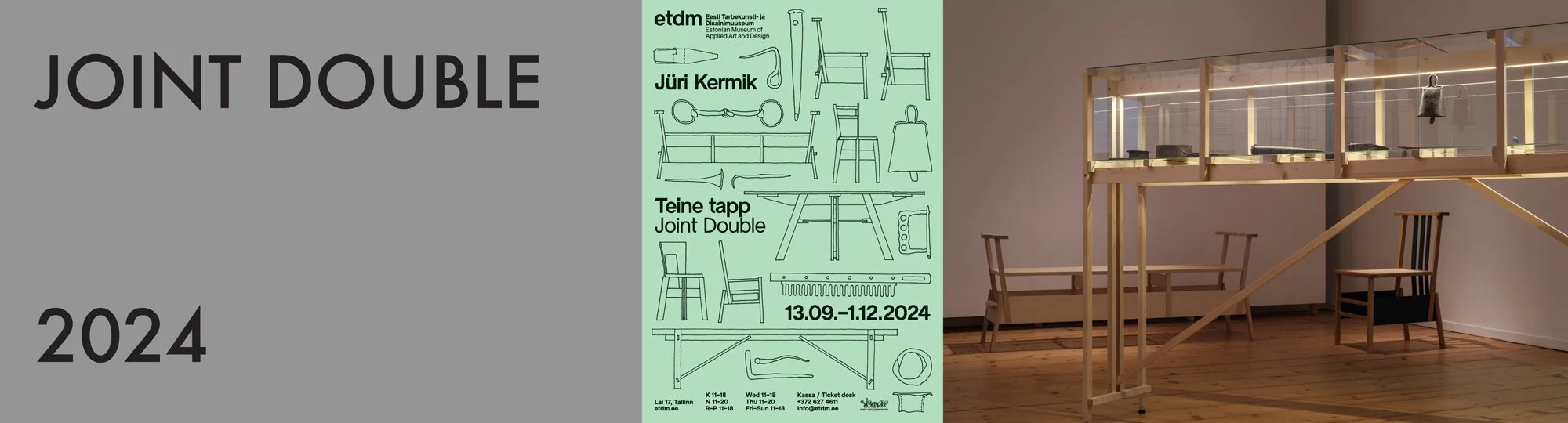
At the heart of ‘Joint Double’ is a scholarly investigation by the designer, design historian and interior architecture professor Jüri Kermik into the layered nature of the design process – how an artist’s creation has the ability to unfold simultaneously into the future as well as into the past. The exhibition sprang from his abiding interest in regional, tradition-based style, asking how form, material, detail and structure convey the identity of a place and at what point an object becomes both personal and geographically definable. The construction of a small hut named Mikuelu turned into a process where creation of the new inevitably meant unearthing the old. Artefact remnants lodged in the soil – tools, metal fragments, agricultural implements – attested to the former nature of the place. ‘In creating the new, I dug up the old,’ noted Kermik. These finds turned into a parallel narrative, which tied in with the making of furniture and searches for structure.
The exhibition linked past stratifications and future-oriented searches for form. Kermik’s furniture and unearthed objects made up a single narrative, exposing the design process as a point where material, structure and personal experience meet. ‘Joint Double’ is not only a technical term but a motif – the moment that an object gets an identity, communicating the genius loci and migrating traditions.
G. Tiigiste, architecture critic, ‘Ruumipilt 2025’.

J. Kermik (2023-24) SUFFOLK CHAIR I & II, WEDDING CHAIR.
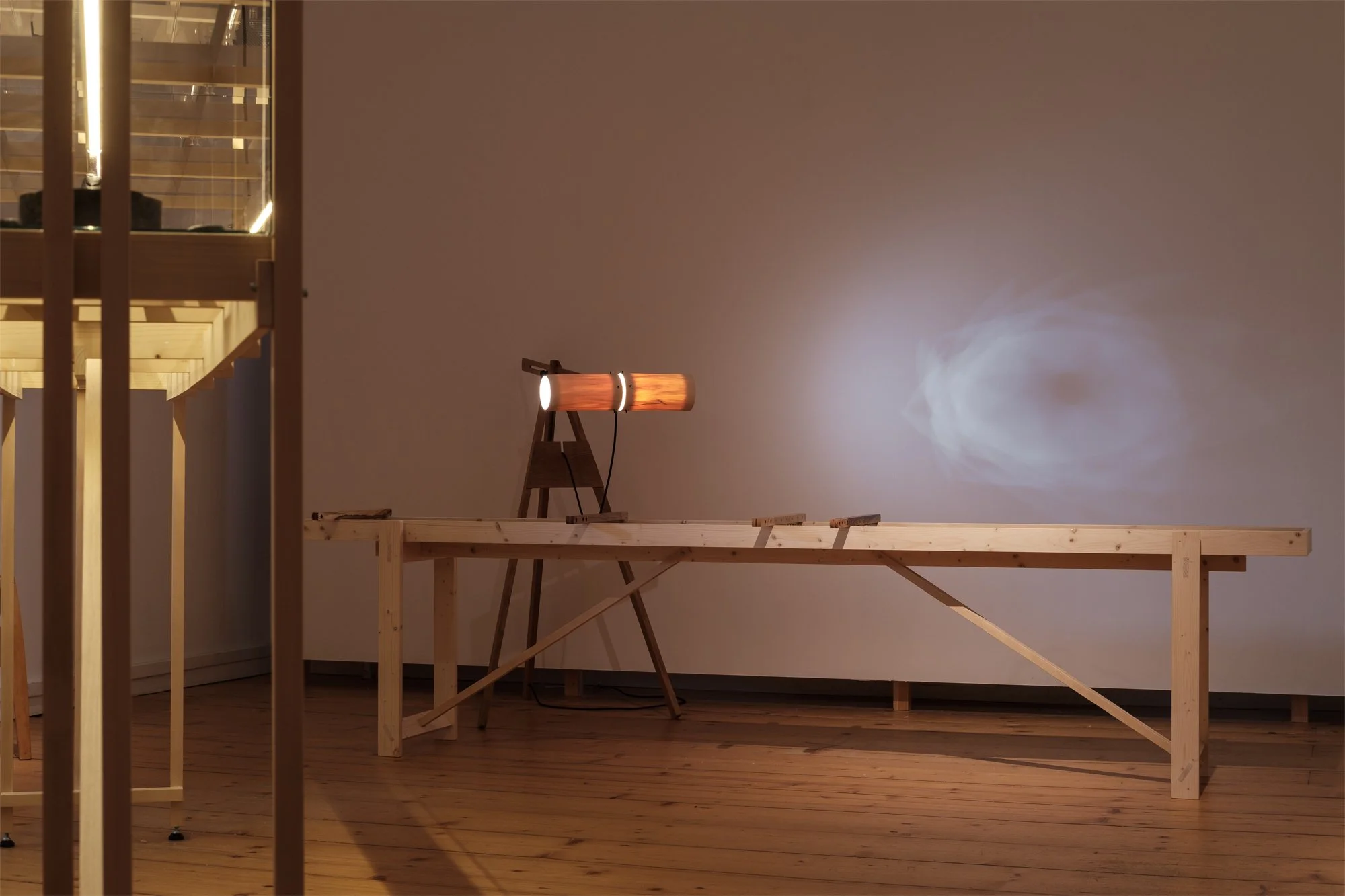
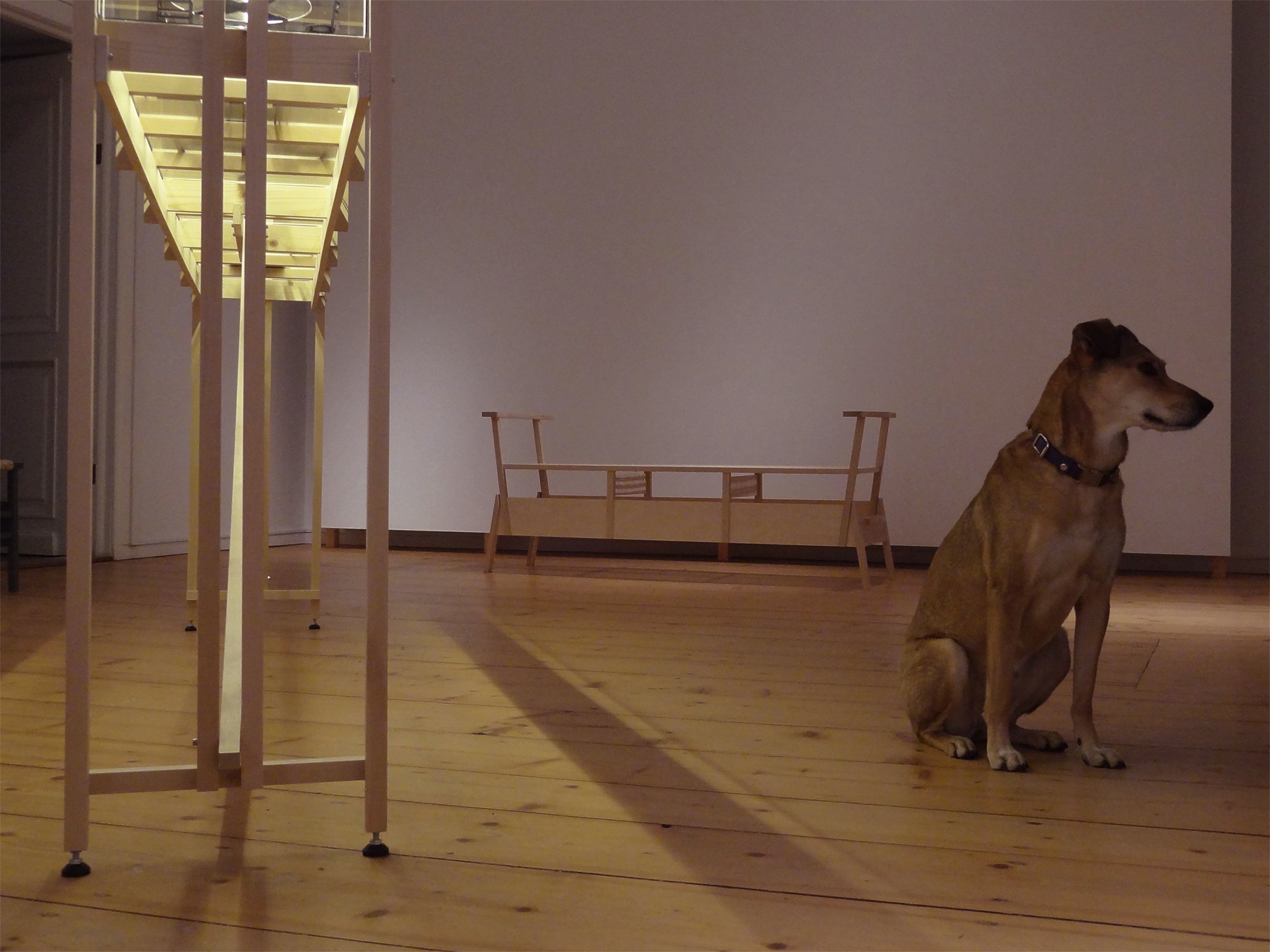
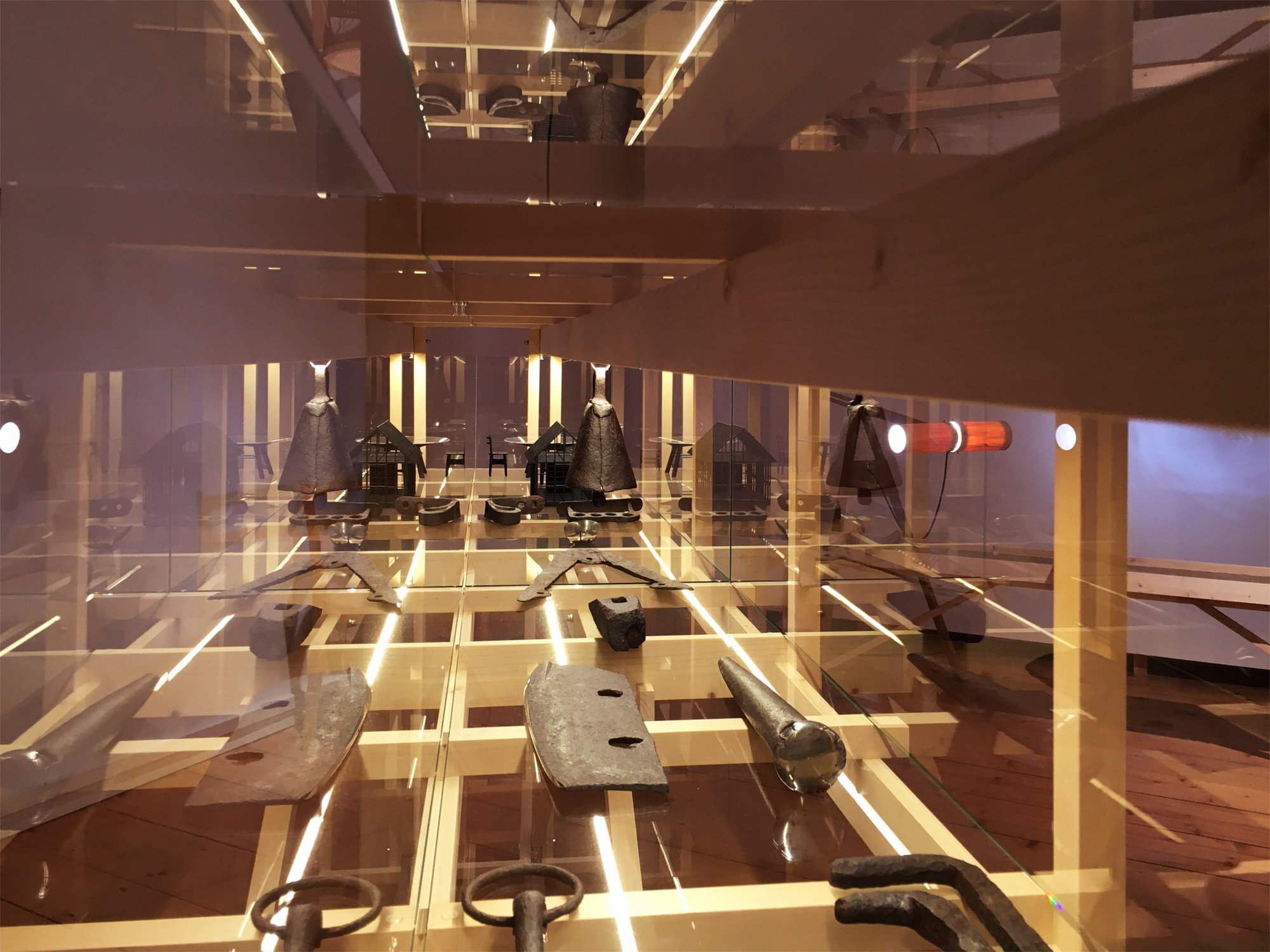
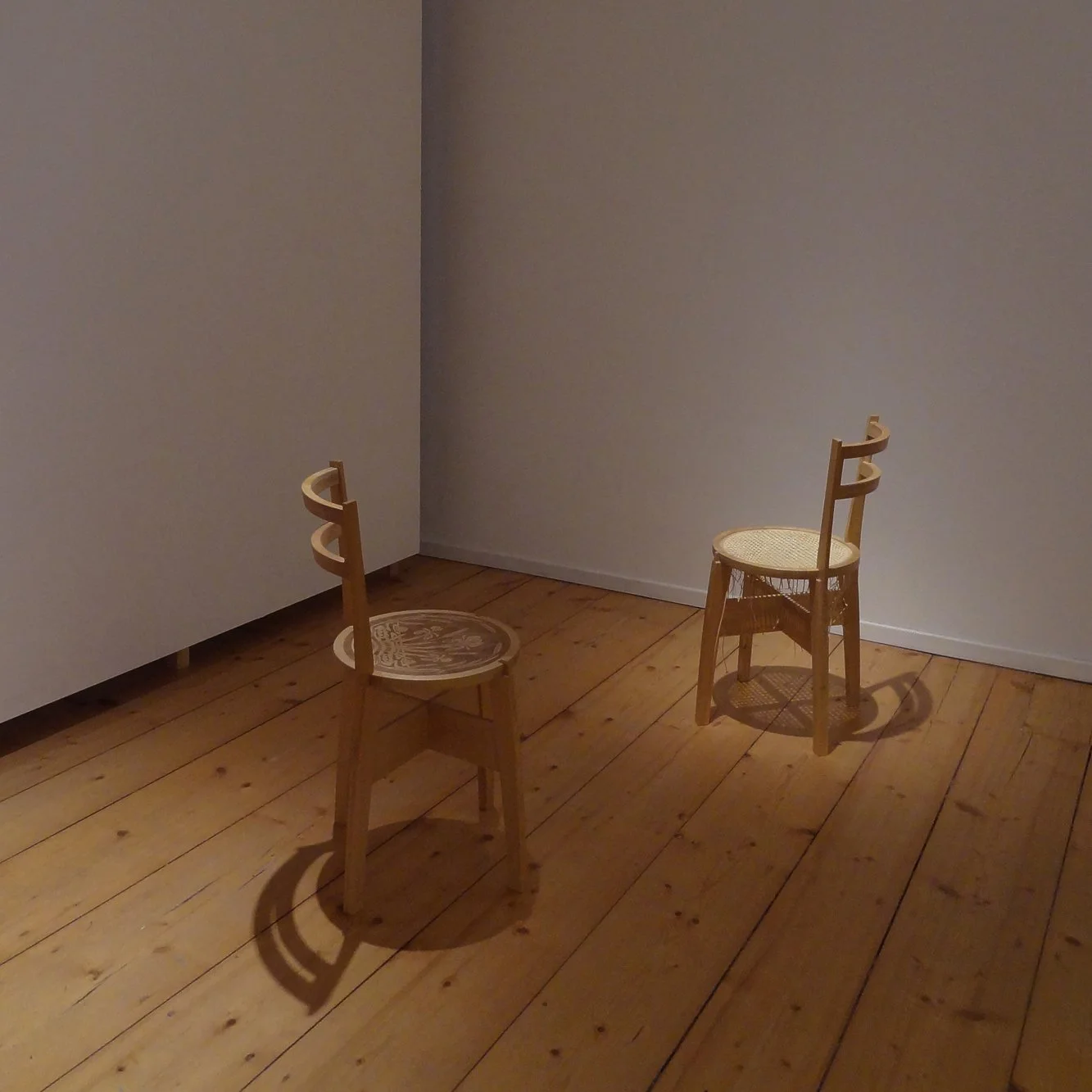
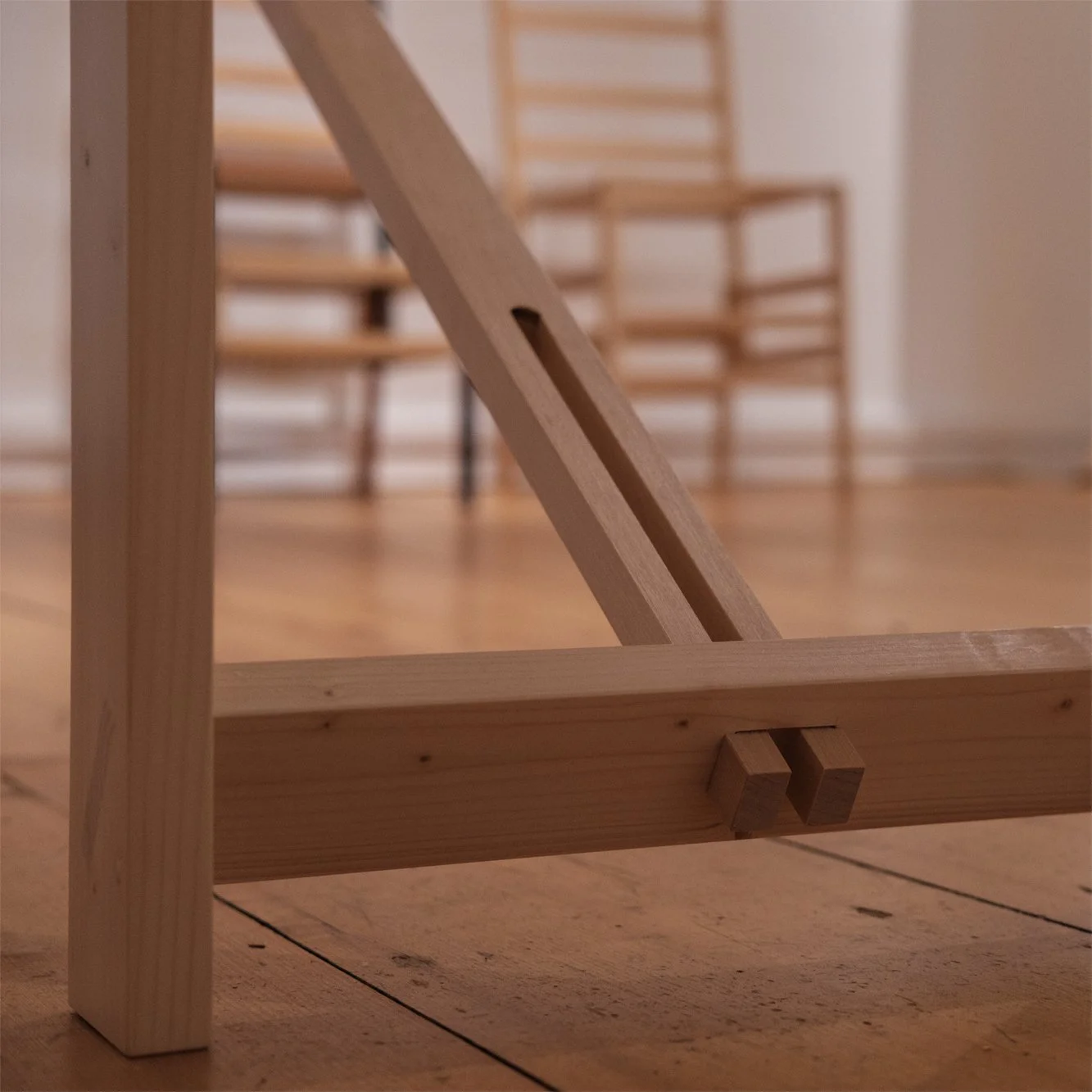
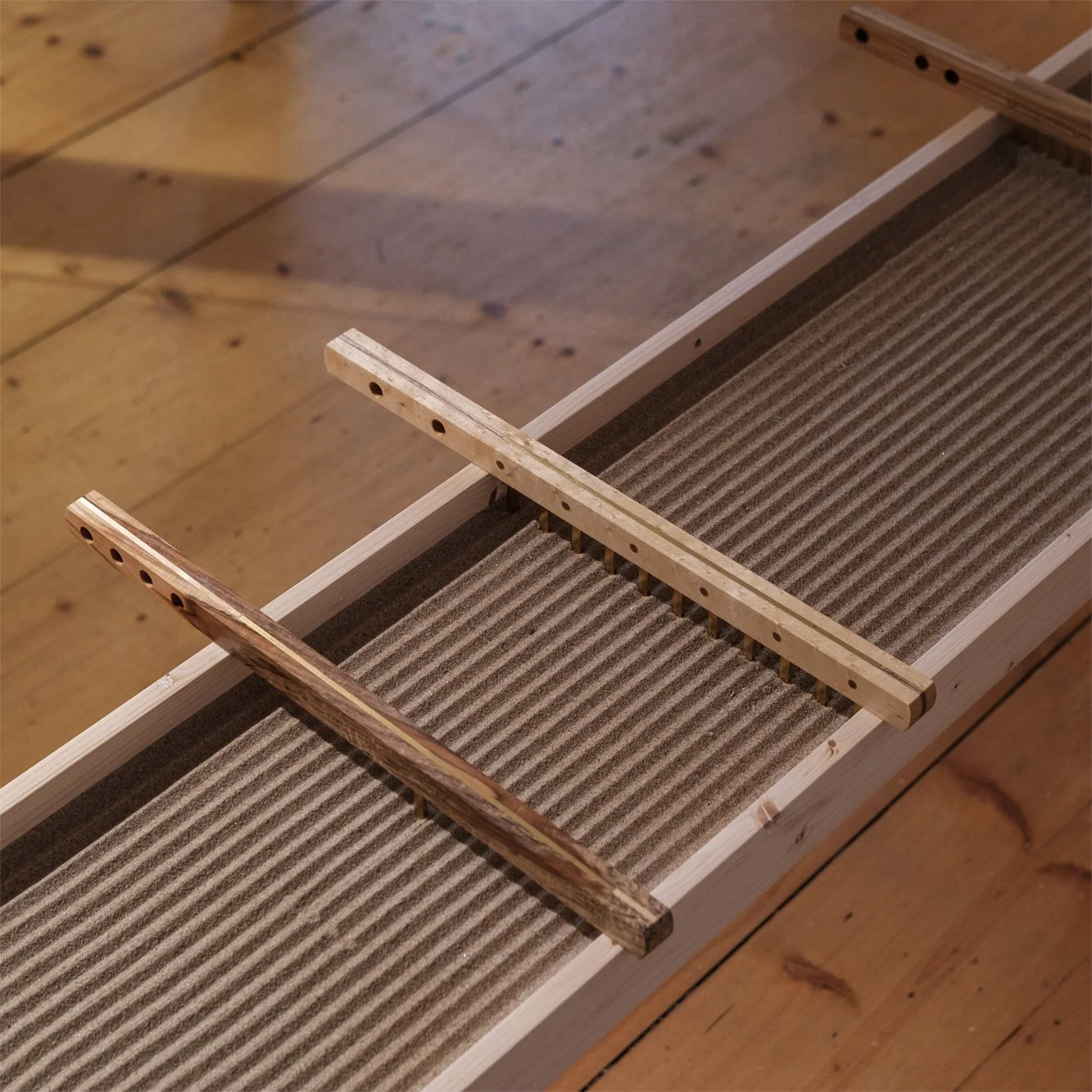
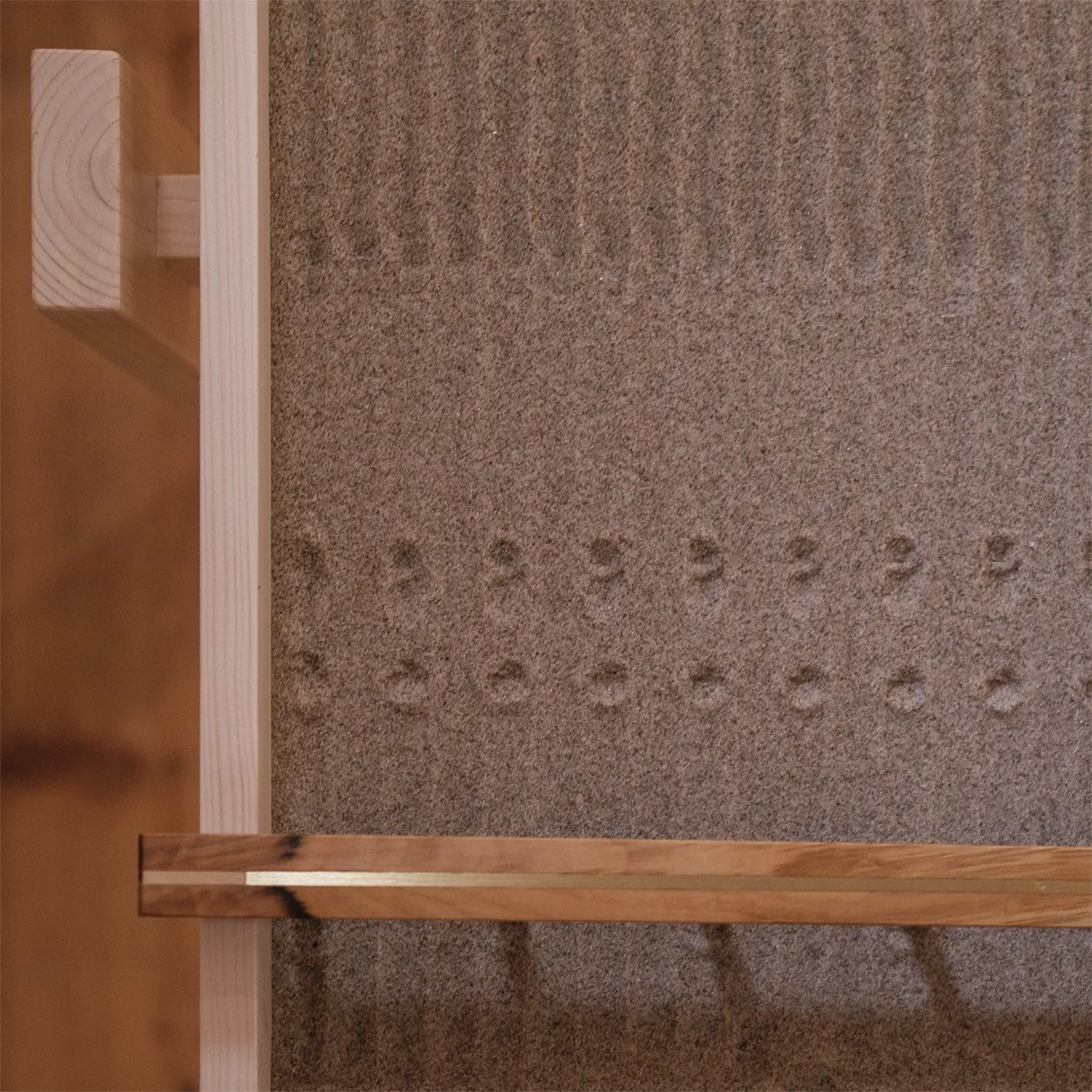
Photography: P.-J. Keedus & J. Kermik; visitor: Siidi.
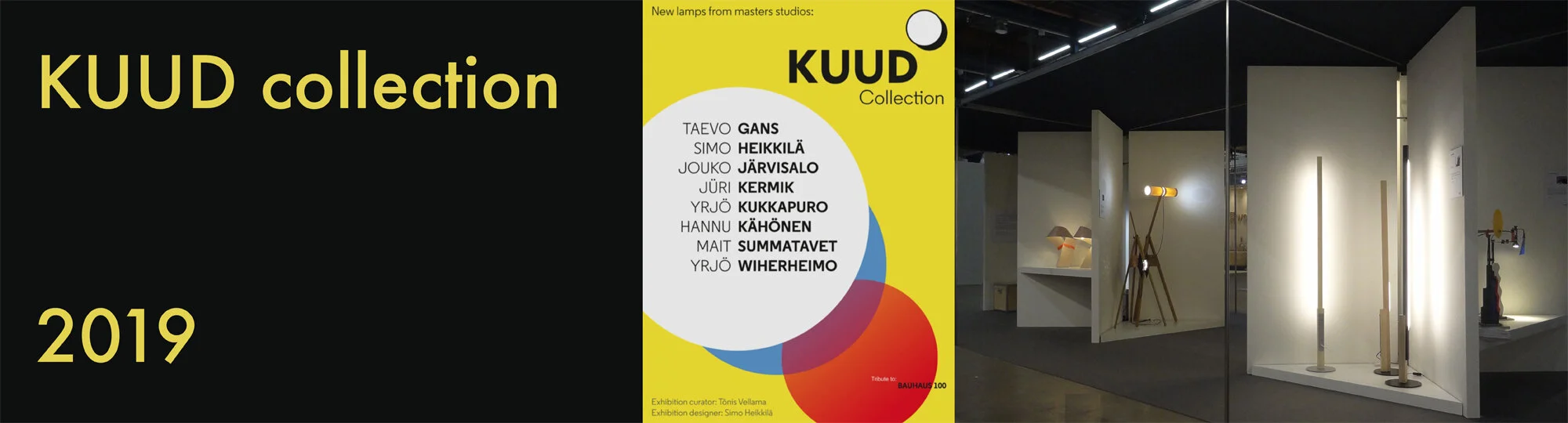
‘KUUD’ collection of lights by Taevo Gans, Simo Heikkilä, Jouko Järvisalo, Jyri Kermik, Yrjö Kukkapuro, Hannu Kähönen, Mait Summatavet and Yrjö Wiherheimo exhibited in Helsinki (Habitare) and Tallinn (Applied Art and Design Museum) in September – October 2019.
The exhibition, curated by T. Vellama and designed by S. Heikkilä, showcased work from a group of Finnish and Estonian designers. Its title ‘KUUD’ (Moons - both in Finnish and Estonian) refers to the light in nature.
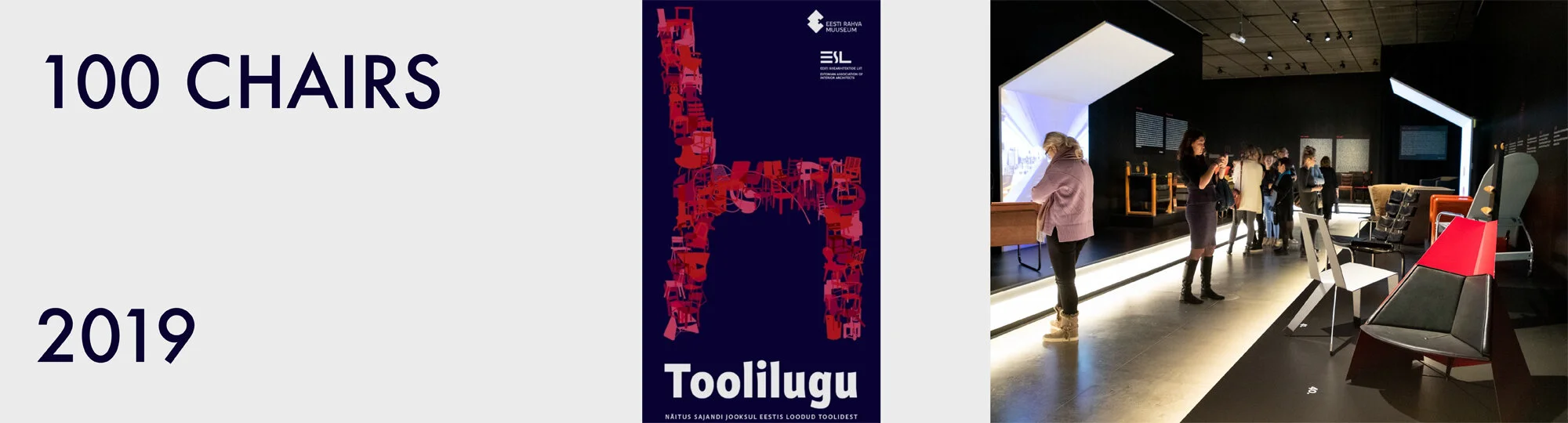
The exhibition ‘Toolilugu’ (A Story of the Chair) presents 100 years of Estonian chair design at the Estonian National Museum. Curatorship and exhibition design concept by H. Liivrand, L. Sokolova and K. Tammsaar. The exhibition examined the history of Estonian chair design to bring together iconic chairs that could be found in public and private spaces. Two chairs by Kermik (ÄKSI and Pyramid) were included in the selection.
‘We chose chairs without which we simply couldn’t imagine our design history, and chairs whose uniqueness is a symbol of time …’ H. Liivrand, ‘Toolilugu’, 2019.
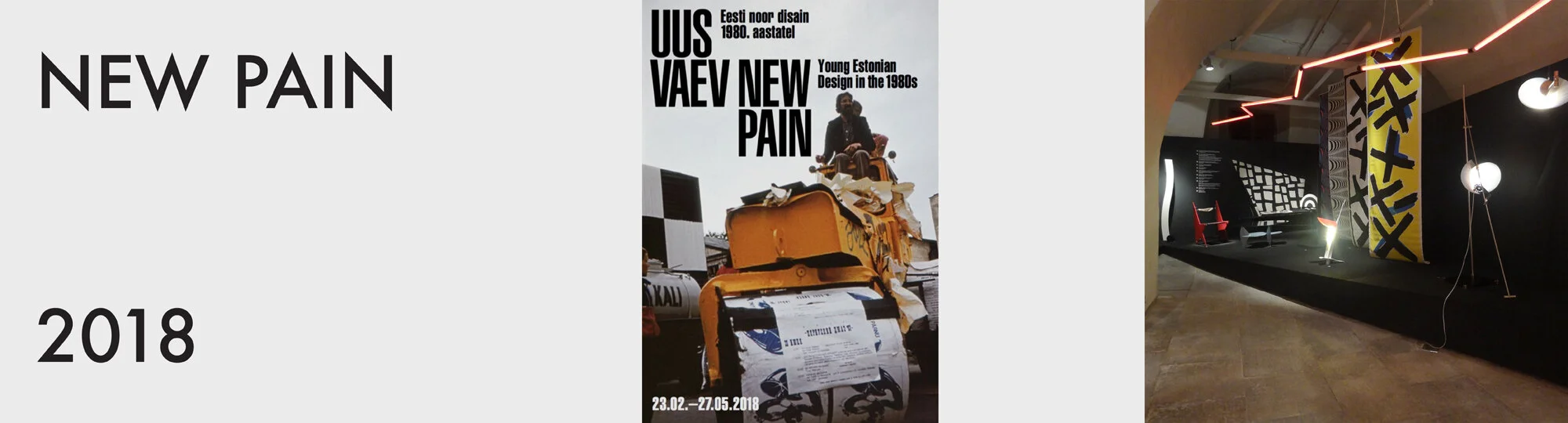
Estonian Museum of Applied Arts and Design. Curator: J. Kermik, exhibition design: K. Harkmaa and I. Valdur, 3+1 Architects, graphic design: Stuudio Stuudio.
The exhibition focuses on the emerging generation of Estonian designers in the 1980s. ‘New Pain’ (Uus Vaev) is a phrase from the 1980s that was employed to mock the increasingly commercial and apolitical New Wave movement in the West. It was also used as a device to subvert Soviet authority in Estonia during the last decade under Communist rule. Estonian designers who emerged from this period of ideological polarization were operating in circumstances very different from their Western counterparts. In denouncing the hostility of the environment in which they found themselves, young Estonian designers set out to formulate their own.
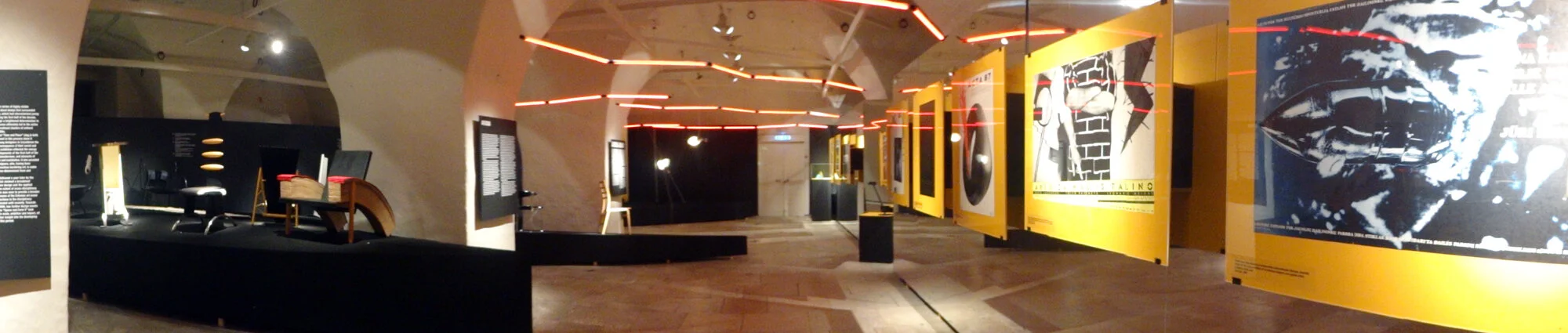
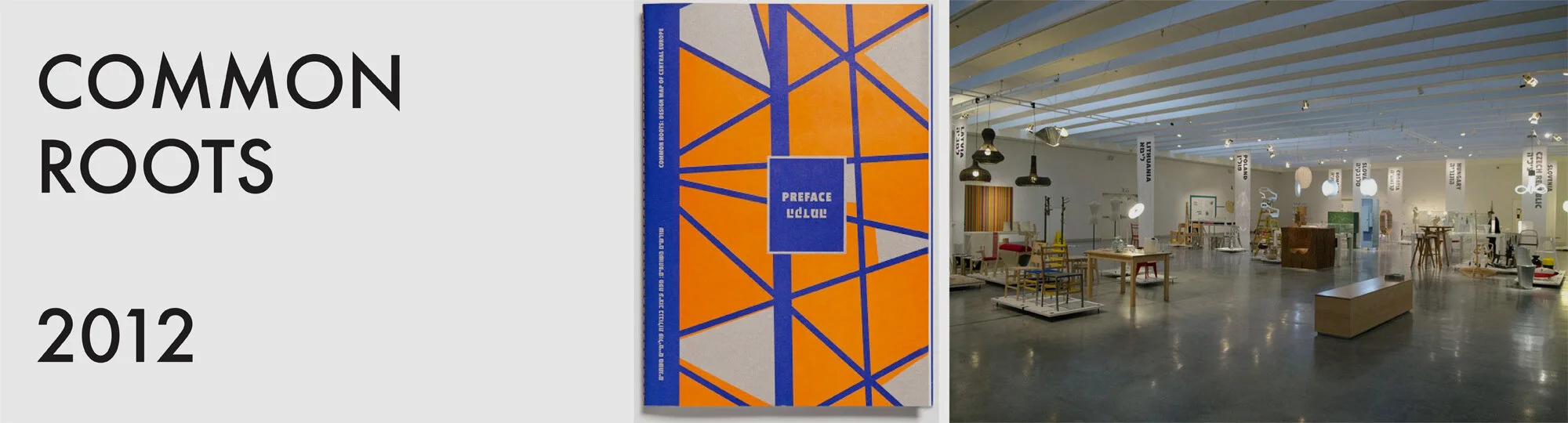
‘Common Roots: Design Map of Central Europe’, Design Museum Holon, Jerusalem. Leading curator A. Jacobson-Cielecka.
‘Common Roots’ evolved through the examination of the similarities in the development of regional design narratives. At the heart of the project, which was supported by an international curatorial team, was the belief that it was pointless to think of contemporary design within the framework of national categories. In today's world, the identity of designers is much more complicated and complex than the one described by their country of origin (A. Jacobson-Cielecka).
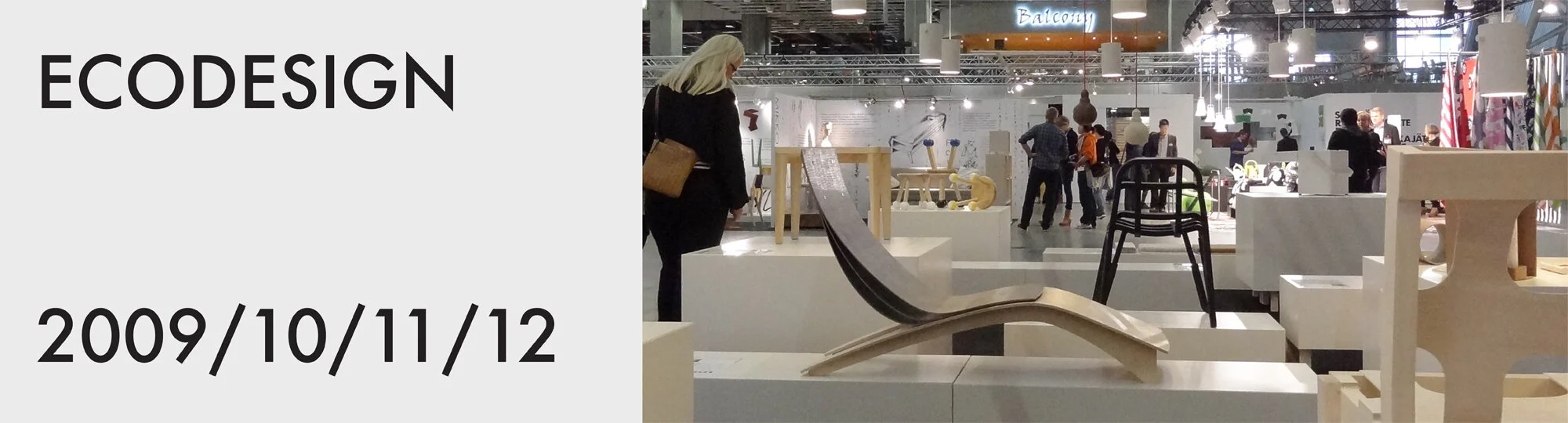
Kermik was among 24 designers invited to participate in the ‘EcoDesign 2009’ in Helsinki. His exhibit ‘Randwall Eco Chair’ was developed through the synthesis of traditional and contemporary materials and techniques.
For the ‘EcoDesign 2010’, a theme of ecological lighting was proposed by Ingo Maurer who was curating the exhibition. Kermik’s design ‘Weight-Light’ explored gravity to devise a mechanical operation of the light as an object as well as an installation to animate the space with light and moving shadows.
Kermik’s engagement with the EcoDesign community and events continued with two further projects, ‘Stand-Point’ (2011) and ‘Woven Wind’ (2012) respectively.

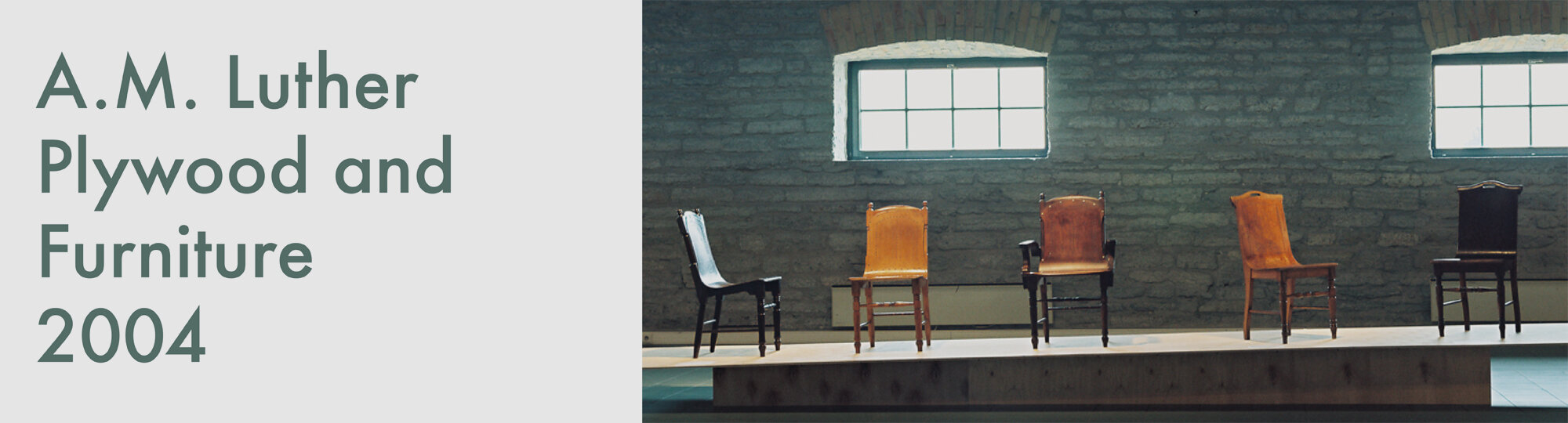
'The Luther Factory: Plywood and Furniture', The Museum of Estonian Architecture, 2004. Curated by J. Kermik, exhibition design E. Jürgenson.
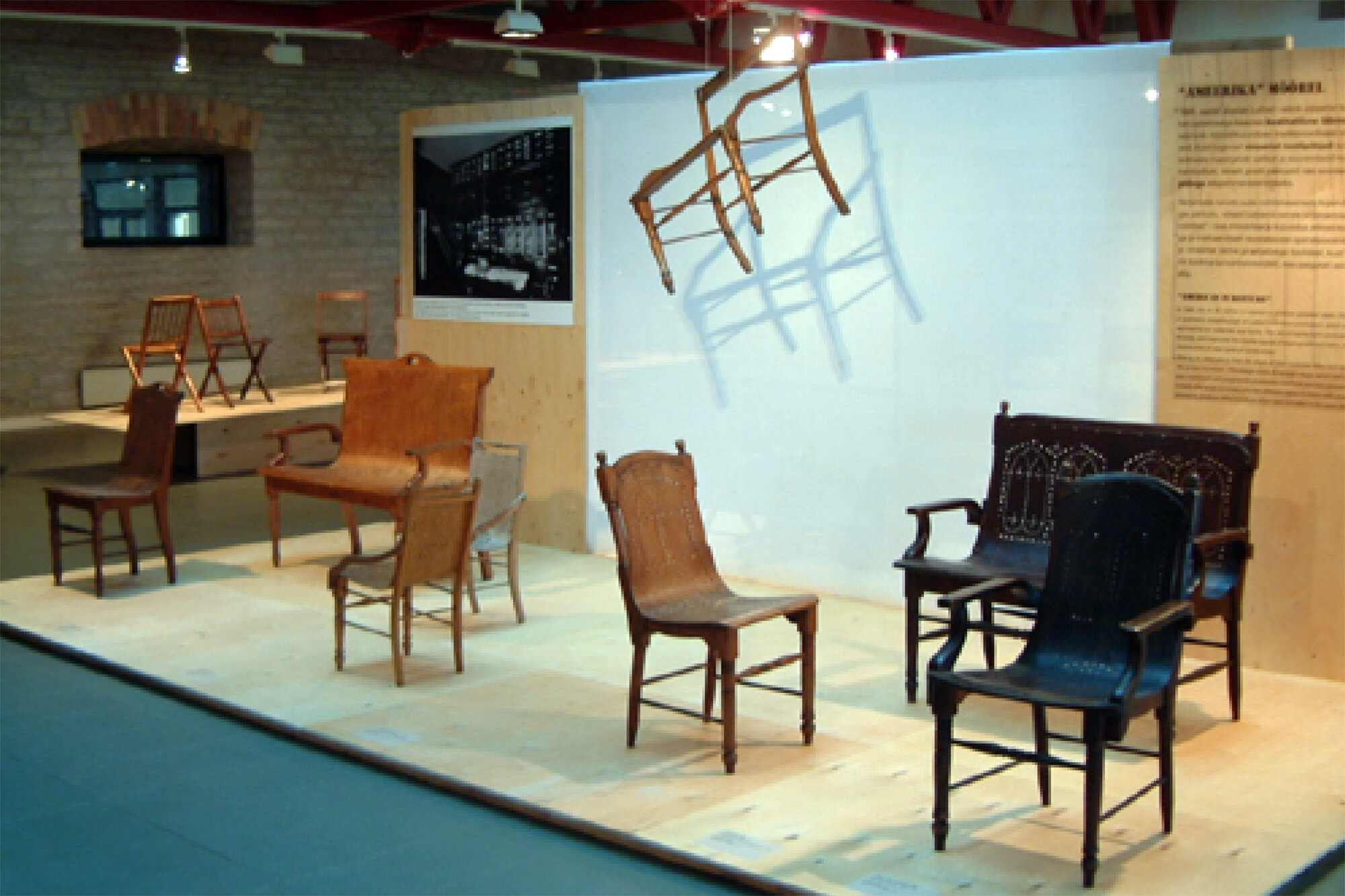
Following the publication of the A. M. Luther monograph Kermik was invited to curate an exhibition of Luther furniture at the Museum of Estonian Architecture. The aim of the exhibition was to create an overview of the company’s design legacy which uniquely span over 70 years. The exhibition featured 50 plywood chairs to illustrate the development of industrial processing techniques and ideas from early years of standardisation to the application of modernist design principles during the 1930s.
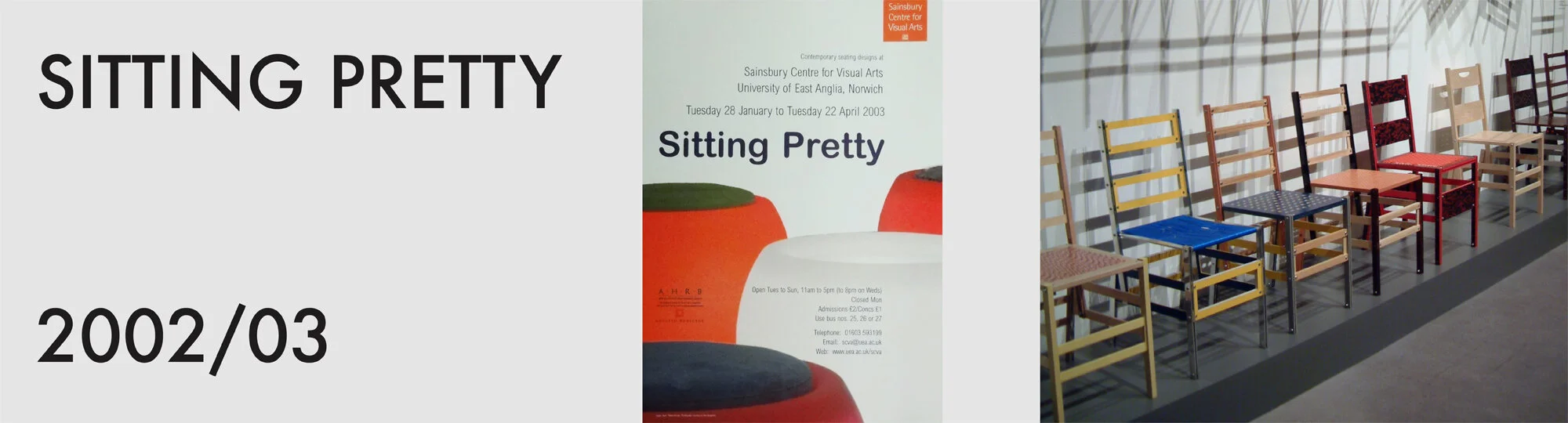
’Sitting Pretty – Contemporary Seating Designs’ was first shown in Belsay Hall, Northumberland in the summer of 2002. In the following year, the exhibition was brought to the Sainsbury Centre for Visual Arts, Norwich. ‘Sitting Pretty’ was organised by English Heritage and curated by Judith King.
Participants included David Linley, Eley Kishimoto, Claudio Silvestrin, Karim Rashid, Jyri Kermik, Totem Design, Langlands + Bell, EOOS and Byron Miller. ‘Setting Pretty’ was not just about chairs. It’s curator wanted to ‘offer an entire landscape of seating suggestions focusing on enquiry and subversion informing innovative design developed in different historical and cultural context.’ (J. King).
‘Kermik has taken a traditional chair and reinvented it. Called ÄKSI, after an Estonian village, he makes the same design using various combinations of materials: timber, plywood, sheet metal, rubber, nylon string. The results are beautiful – each one the same but different, reinforcing the nature of craft production but updating it. And, like the exhibition itself, they prove that there’s more to heritage than meets the eye’. F. Rattray, ‘Country Seat’, The Independent Magazine – Design, 25 May 2002.
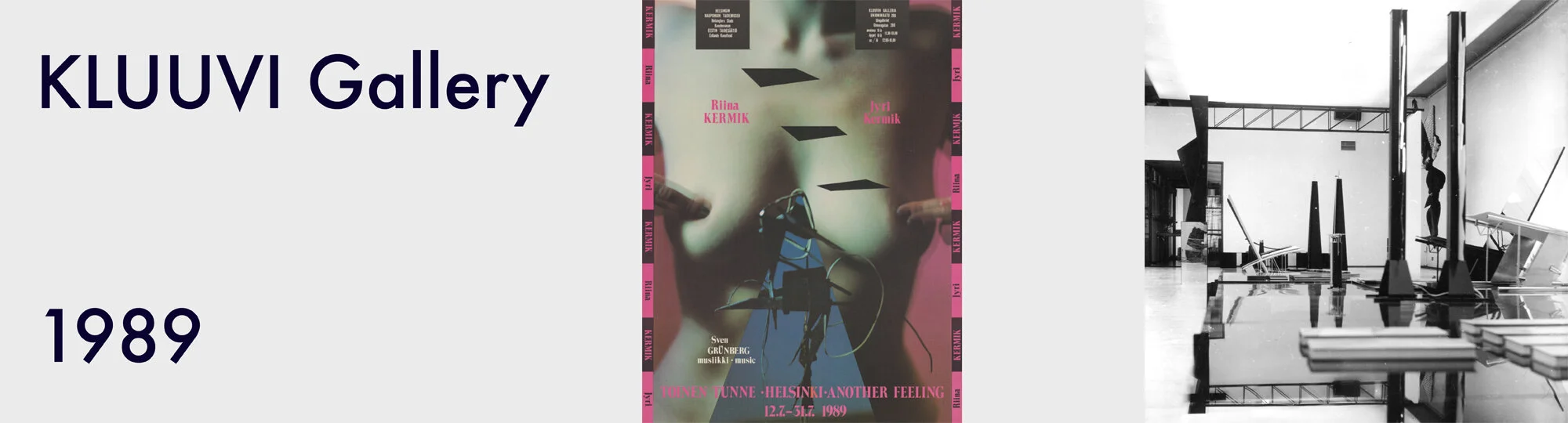
‘Helsinki – Another Feeling’, joint exhibition by Riina Kermik (leather art – spatial objects, clothing and bookbinding) and Jyri Kermik (furniture, lighting and exhibition design) in the Kluuvi Gallery, Helsinki. Exhibition poster by S. Vahtre.
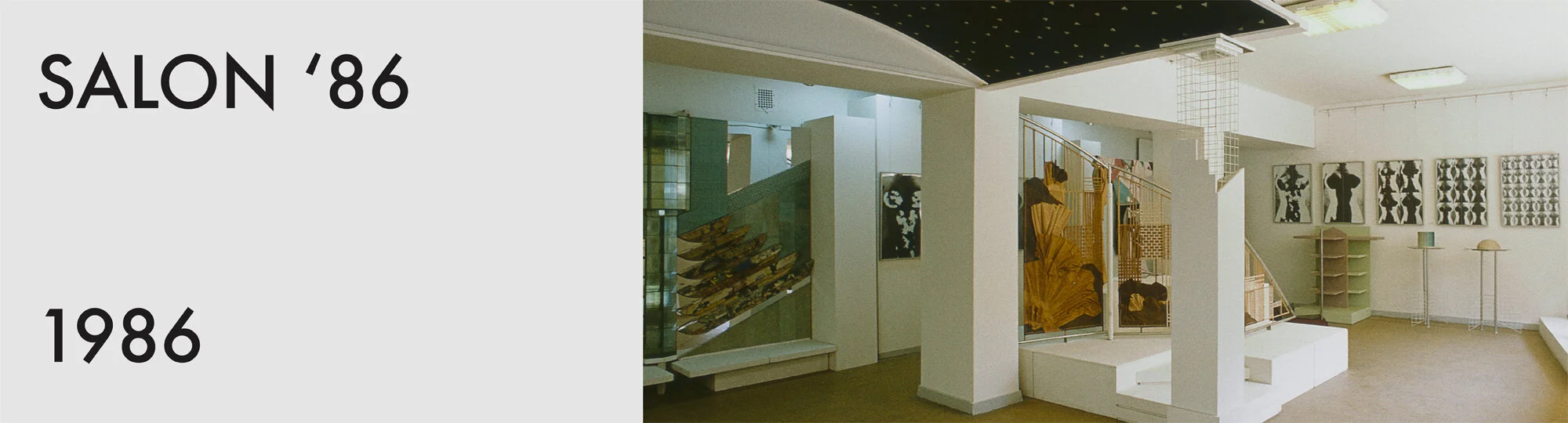
In 1985, a group of young Estonian artists-designers began to work on an idea of a holistic spatial experience based on the synthesis of different disciplines. The goal was not (merely) limited to bringing objects from different fields and of various materials into the same space, but to achieve synthesis through their actual co-creation.
Two exhibitions resulted from this collaboration: ‘Salon ’86’ (Estonia, 1986) and ‘Vilnius’ (Lithuania, 1987). Participants included Riina Kermik and Sirje Kriisa (leather), Vello Soa and Ivo Lill (glass), Margus Haavamägi (graphics), Jyri Kermik (interior design and furniture), Ain Varts and Margus Kappel (sound). Malle Agabuš (furniture) replaced Margus Haavamägi at the exhibition held in Vilnius. Exhibition posters by M. Haavamägi (1986) and J. Kass (1987).
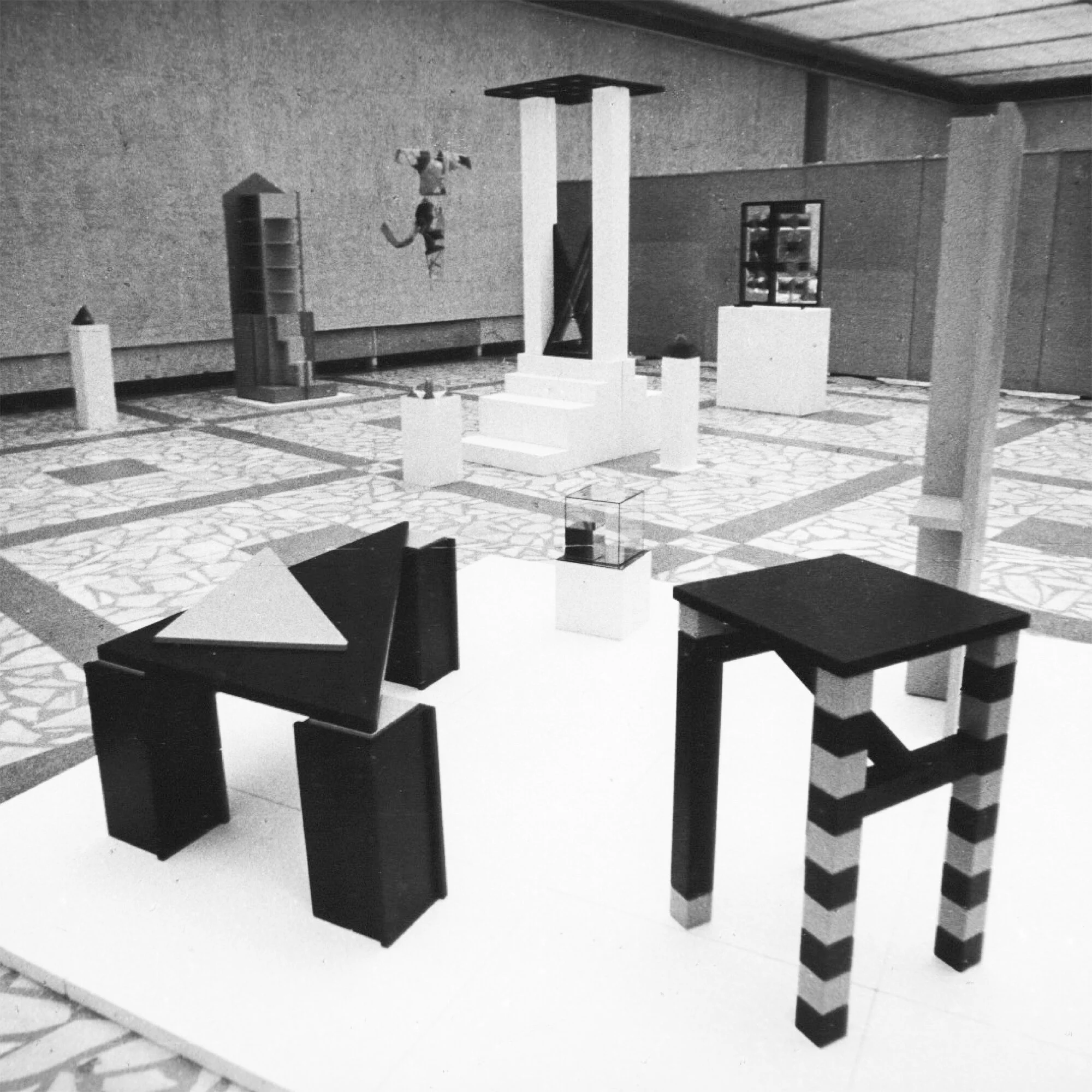
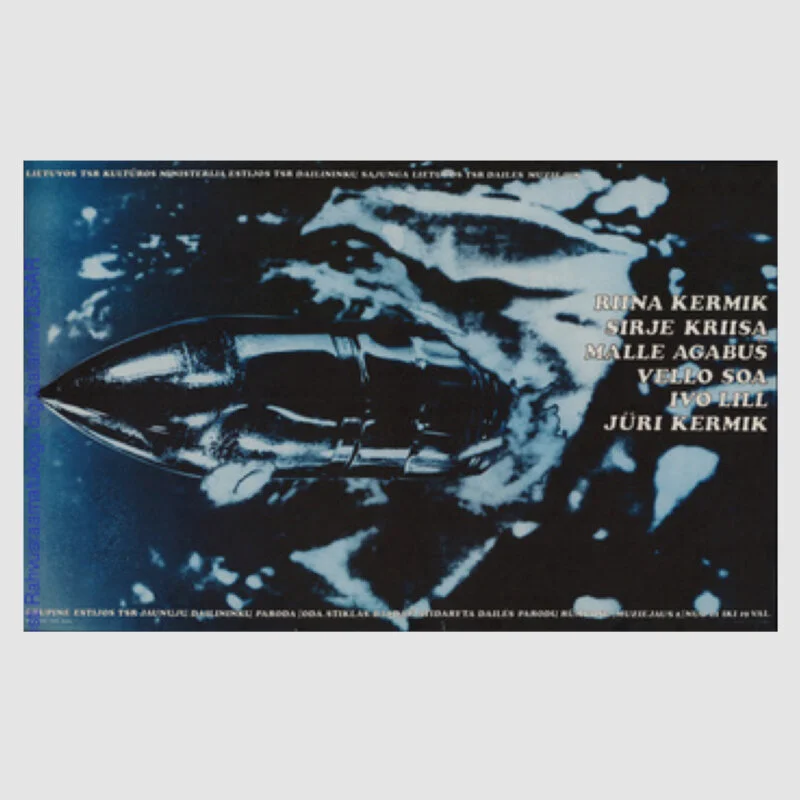
Poster for the ‘Vilnius’ exhibition, J. Kass (1987).